Have you ever written a sentence and paused to wonder whether pail vs pale is the correct word choice? You are not alone. These two words sound exactly alike, making them classic examples of homophones—words that share the same pronunciation but have different meanings and spellings.
Understanding the difference between pail and pale can improve your writing, prevent common mistakes, and help you communicate more clearly. In this guide, we will break down the meanings of both words, explain when to use each one, provide practical examples, and share simple memory tricks so you never confuse them again.
What Does Pail Mean?
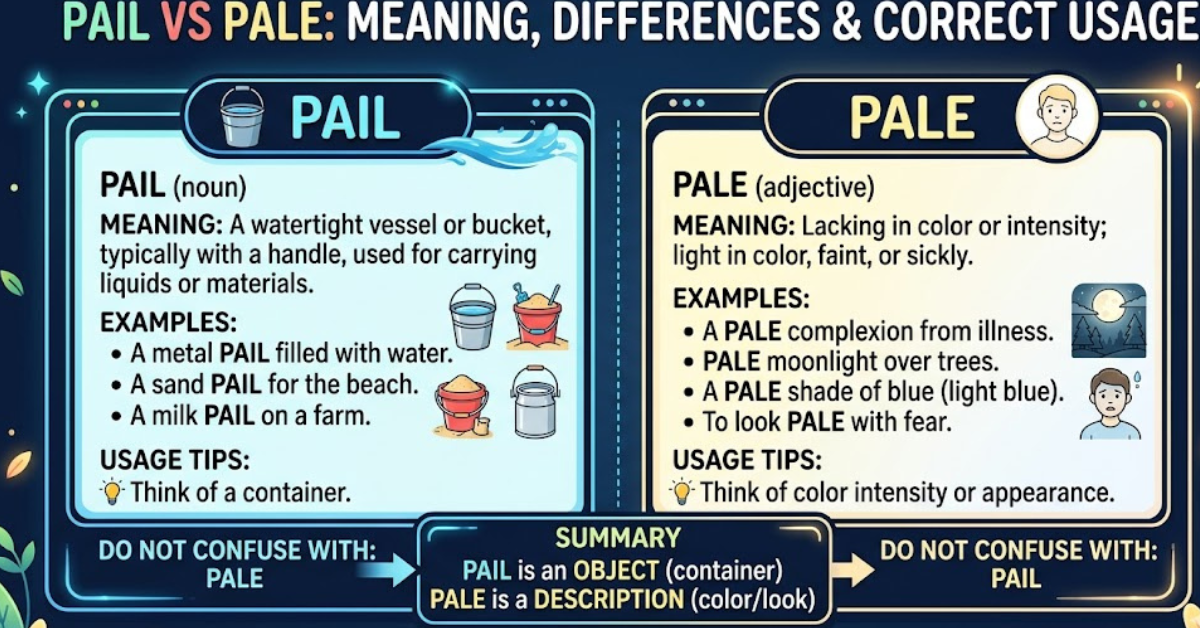
A pail is a noun that refers to a container, usually shaped like a bucket, with a handle used for carrying liquids, sand, soil, or other materials.
The word pail is often associated with household chores, gardening, farming, construction, and childhood activities like building sandcastles.
Examples of Pail in Sentences
- The child carried a pail of water from the river.
- She filled the pail with fresh apples from the orchard.
- The gardener used a metal pail to collect weeds.
- The little boy took his bucket and pail to the beach.
Common Phrases with Pail
Some popular expressions include:
- A pail of water – a traditional phrase from the nursery rhyme “Jack and Jill.”
- Milk pail – a container used to collect or store milk.
- Water pail – a bucket used for carrying water.
In simple terms, if you are talking about a bucket or container, the correct word is pail.
What Does Pale Mean?
The word pale can be an adjective, noun, or verb depending on the context. Most commonly, it describes something that has a light color or a lack of strong color.
It can also refer to a person’s complexion, often indicating that someone looks sick, frightened, or tired.
Examples of Pale in Sentences
- Her face became pale after hearing the shocking news.
- The room was decorated with pale shades of blue and gray.
- The moon looked pale behind the clouds.
- His achievements pale in comparison to hers.
Different Uses of Pale
The word pale can describe:
- Color: a pale pink dress, pale green walls.
- Appearance: a pale face due to illness or fear.
- Comparison: “My concerns pale beside the larger issue.”
- Boundaries: Historically, a pale could mean a boundary or enclosed area.
Generally, if you mean light in color or lacking intensity, choose pale.
Pail vs Pale: The Main Differences
Although they sound identical, pail vs pale comes down to meaning and usage.
| Feature | Pail | Pale |
| Meaning | A bucket or container | Light in color or lacking brightness |
| Part of Speech | Noun | Mostly adjective, sometimes noun or verb |
| Related Topics | Water, carrying, storage | Colors, appearance, comparison |
| Example | “Fill the pail with water.” | “The sky was pale blue.” |
The easiest way to remember the difference is to focus on what you are describing: a container requires pail, while a color or appearance requires pale.
Easy Memory Tricks for Pail vs Pale
Remembering the difference does not have to be difficult. Try these simple tricks:
1. Pail Has “AI” Like “Carry”
Think of a pail as something you carry around with a handle.
2. Pale Has “A” Like “Appearance”
A pale face describes someone’s appearance or color.
3. Think of the Context
Ask yourself:
- Are you talking about a bucket or container? → Pail
- Are you describing color, skin tone, or brightness? → Pale
The surrounding words usually reveal the correct choice.
Why Are Pail and Pale Often Confused?
The confusion between pail vs pale exists because they are homophones. In English, many words have the same pronunciation but different meanings and spellings.
Other commonly confused homophones include:
- There, their, and they’re
- Your and you’re
- To, too, and two
- Brake and break
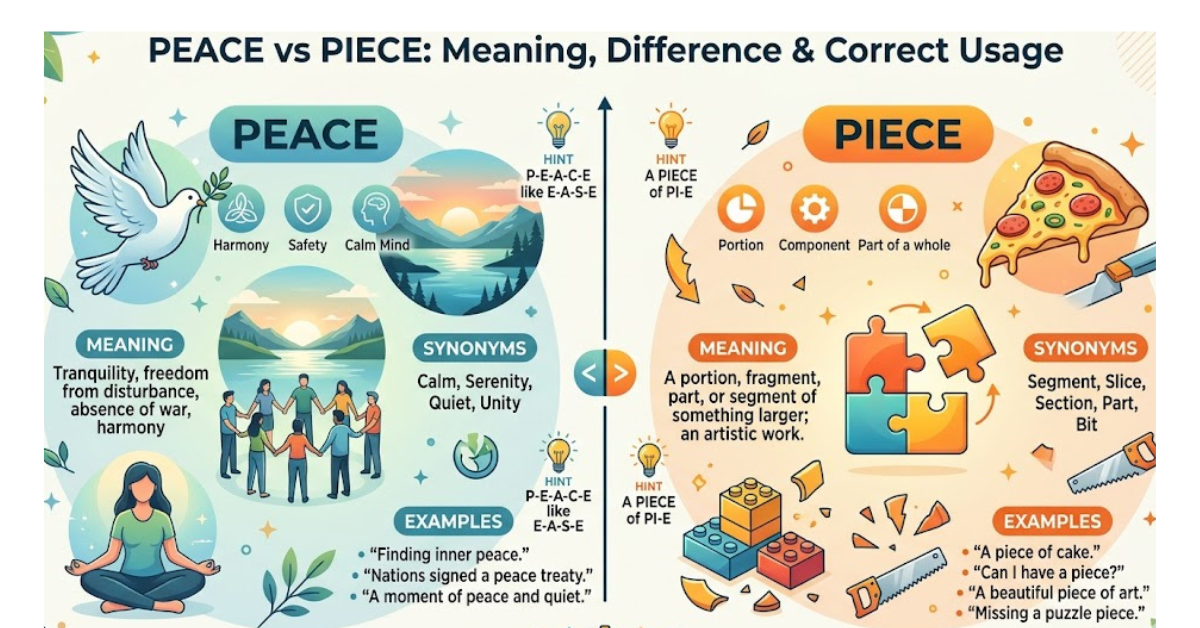
- Piece and peace
Learning the meaning of each word and paying attention to context helps avoid these errors.
Common Mistakes When Using Pail and Pale
Many writers accidentally substitute one word for the other because spellcheck may not catch the mistake.
Incorrect:
- “She carried a pale of water.”
Correct:
- “She carried a pail of water.”
Incorrect:
- “His face turned pail after the accident.”
Correct:
- “His face turned pale after the accident.”
Always review your writing to make sure the word matches your intended meaning.
Pail vs Pale in Everyday English
Both words appear frequently in everyday conversations, books, and writing.
You might hear pail in situations involving:
- Cleaning supplies
- Gardening
- Farming
- Construction
- Beach activities
You will commonly see pale used when discussing:
- Colors and design
- Human appearance
- Weather and nature
- Comparisons and emotions
Understanding these contexts makes choosing the right word much easier.
FAQs About Pail vs Pale
Is a pail the same as a bucket?
Yes, a pail is essentially a type of bucket. The terms are often used interchangeably, although a pail traditionally refers to a smaller container with a handle.
Does pale mean white?
Not exactly. Pale means light in color or lacking strong intensity. A pale object can be pink, blue, yellow, or another soft shade—not necessarily white.
Why do pail and pale sound the same?
They are homophones, which means they share the same pronunciation but have different spellings and meanings.
Which is correct: “a pail of water” or “a pale of water”?
The correct phrase is “a pail of water” because it refers to a container holding water.
Can pale be used as a verb?
Yes. As a verb, pale means to become less important or less impressive in comparison to something else, as in “The problem paled compared to the challenges ahead.”
Conclusion: Mastering Pail vs Pale
The difference between pail vs pale is simple once you understand their meanings. A pail is a bucket or container used for carrying things, while pale describes a light color, a person’s appearance, or something that becomes less significant by comparison.
Because these words sound identical, they are easy to mix up, but context provides the answer every time. Keep the memory tricks in mind, practice with examples, and you will confidently choose the correct word in your writing. For more grammar guides and common word comparisons, explore related English language articles and continue improving your vocabulary.