
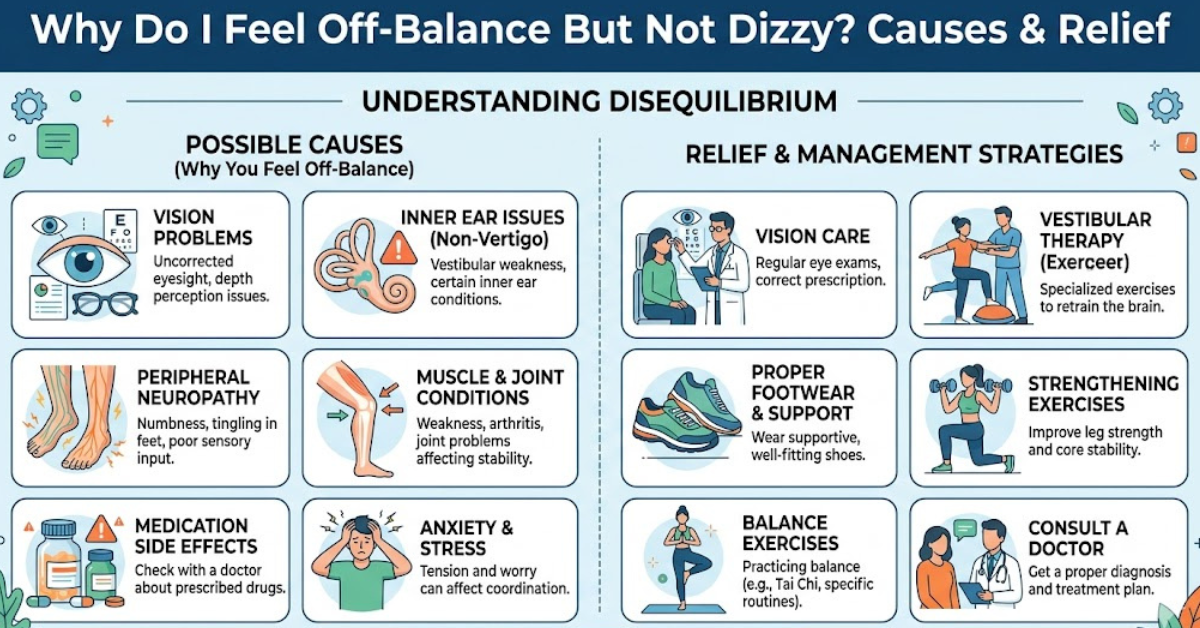
Have you ever stood up, started walking, or turned your head and suddenly felt unsteady—even though the room wasn’t spinning? If you’ve been asking yourself, “why do I feel off-balance but not dizzy?” you’re not alone. Many people experience a sensation of instability, swaying, or feeling like they might fall without experiencing traditional dizziness.
Feeling off-balance can result from issues involving the inner ear, nervous system, muscles, vision, circulation, or even stress and anxiety. While occasional imbalance may not be serious, persistent or worsening symptoms should be evaluated by a healthcare professional.
This guide explores the possible causes, symptoms, treatment options, and signs that indicate it’s time to seek medical attention.
What Does It Mean to Feel Off-Balance Without Dizziness?
Feeling off-balance means you have trouble maintaining your normal sense of stability or coordination. Unlike vertigo, which creates a spinning sensation, imbalance may feel like:
- Swaying while standing still
- Walking as though you’re on a boat
- Feeling unsteady or wobbly
- Difficulty walking in a straight line
- A sensation that you might fall
This symptom is often described as unsteadiness, poor balance, or loss of equilibrium.
Common Reasons Why You Feel Off-Balance But Not Dizzy
1. Inner Ear Balance Problems
Your inner ear contains the vestibular system, which sends information to your brain about movement and body position. Even without noticeable dizziness, problems in this system can cause balance difficulties.
Possible conditions include:
- Vestibular neuritis recovery phase
- Age-related decline in vestibular function
- Chronic vestibular disorders
- Inner ear inflammation or damage
You may also notice difficulty walking in the dark or feeling worse when moving your head.
2. Muscle Weakness and Joint Problems
Your muscles and joints provide important feedback that helps you stay balanced. Weakness, stiffness, or reduced sensation can make you feel unstable.
Common causes include:
- Aging-related muscle loss
- Arthritis
- Peripheral neuropathy
- Injury or reduced mobility
Strength and balance exercises can often improve symptoms.
3. Vision Problems and Balance Issues
Your eyes play a major role in maintaining stability. Changes in vision can make it harder for your brain to understand your position in space.
Examples include:
- Poor eyesight
- Needing a new glasses prescription
- Cataracts
- Difficulty seeing in low light
Regular eye exams are important, especially for older adults experiencing balance problems.
4. Low Blood Pressure or Circulation Changes
A sudden drop in blood pressure, especially when standing up, can cause a feeling of unsteadiness without the classic spinning sensation.
Symptoms may include:
- Feeling weak when standing
- Blurred vision
- Lightheadedness
- Temporary imbalance
This is called orthostatic hypotension and can be caused by dehydration, medications, or certain medical conditions.
5. Anxiety and Stress
Mental health can affect physical balance more than many people realize. Anxiety can create sensations such as:
- Feeling detached or “floaty”
- Unsteadiness while walking
- Difficulty concentrating on movement
- A sensation of being pulled to one side
Stress can also increase muscle tension and make you more aware of normal body sensations.
6. Neurological Conditions
The brain and nervous system coordinate balance. Problems affecting these systems may cause persistent instability.
Examples include:
- Migraine-related balance problems
- Multiple sclerosis
- Parkinson’s disease
- Stroke or transient ischemic attack (TIA)
- Cerebellar disorders
Neurological causes often come with additional symptoms, such as weakness, numbness, speech difficulties, or changes in coordination.
7. Medication Side Effects
Many prescription and over-the-counter medications can affect balance.
Common examples include:
- Blood pressure medications
- Sleeping pills
- Anti-anxiety medications
- Antidepressants
- Certain seizure medications
Never stop a prescribed medication without consulting your healthcare provider.
8. Low Blood Sugar or Nutritional Deficiencies
Your body requires proper nutrients and energy to maintain normal function. Low blood sugar or deficiencies may contribute to imbalance.
Possible deficiencies include:
- Vitamin B12 deficiency
- Vitamin D deficiency
- Iron deficiency anemia
A healthcare provider can determine whether blood tests are needed.
When Should You Worry About Feeling Off-Balance?
Occasional mild imbalance may not be an emergency, but certain symptoms require immediate medical attention.
Seek urgent medical care if you experience:
- Sudden severe imbalance
- Weakness or numbness on one side of the body
- Trouble speaking or understanding words
- Sudden vision loss or double vision
- Severe headache unlike your usual headaches
- Loss of consciousness
These could be signs of a stroke or another serious medical condition.
How Doctors Diagnose Balance Problems
To find out why you feel off-balance but not dizzy, a healthcare provider may perform:
- A physical and neurological examination
- Balance and walking tests
- Hearing and inner ear evaluations
- Vision testing
- Blood tests
- Imaging scans such as MRI or CT scans when necessary
A detailed description of when your symptoms happen can help identify the cause.
Treatment Options for Feeling Off-Balance
Treatment depends on the underlying reason for your symptoms.
Common approaches include:
Vestibular Rehabilitation Therapy
Special exercises can train your brain and body to improve balance.
Physical Activity and Strength Training
Improving leg strength and flexibility can reduce instability and lower the risk of falls.
Managing Medical Conditions
Treatment may include:
- Adjusting medications
- Treating vitamin deficiencies
- Controlling blood pressure
- Managing anxiety or neurological conditions
Lifestyle Tips
Try these simple habits:
- Stay well hydrated
- Rise slowly from sitting or lying positions
- Wear supportive footwear
- Keep your home free of fall hazards
- Maintain regular sleep and exercise routines
How Can You Prevent Balance Problems?
Although not all causes are preventable, these steps can support better balance:
- Exercise regularly, especially balance and strength exercises
- Schedule routine eye and hearing checks
- Eat a nutrient-rich diet
- Limit excessive alcohol consumption
- Review medications with your doctor regularly
Prevention becomes especially important as you get older because balance naturally declines with age.
FAQs
Why do I feel off-balance but not dizzy all day?
Constant imbalance can be caused by inner ear disorders, neurological conditions, vision changes, anxiety, medication side effects, or circulation problems. If symptoms last more than a few days or interfere with daily activities, consult a healthcare professional.
Can anxiety make you feel off-balance without dizziness?
Yes. Anxiety can cause sensations of swaying, floating, or instability. This happens because stress affects breathing, muscle tension, and how the brain processes body sensations.
Is feeling off-balance a sign of a stroke?
Sudden imbalance can be a symptom of a stroke, especially when combined with weakness, numbness, trouble speaking, vision changes, or a severe headache. Emergency medical evaluation is necessary in these situations.
Can dehydration cause balance problems?
Yes. Dehydration can lower blood pressure and reduce blood flow to the brain, causing unsteadiness, weakness, or lightheadedness.
Why do I feel like I’m walking on a boat but not dizzy?
This sensation may be related to inner ear problems, vestibular disorders, anxiety, or neurological issues. A medical evaluation may help determine the exact cause.
Conclusion
If you’re wondering, “why do I feel off-balance but not dizzy?” the answer can range from simple issues like dehydration or vision changes to more complex problems involving the inner ear, nerves, or brain. Paying attention to when the sensation occurs and whether other symptoms appear can provide important clues.
Mild occasional imbalance may improve with healthy habits, but persistent, worsening, or sudden balance problems should be evaluated by a healthcare professional. Understanding the cause is the first step toward restoring stability and confidence in your everyday movements.