Have you ever received a message saying, “You should come with us—you don’t want FOMO!” and wondered what it meant? You’re not alone. Internet slang evolves quickly, and understanding modern abbreviations can make online conversations much easier to follow.
The fomo meaning in text is one of the most searched social media and messaging terms today. Whether you’re texting friends, scrolling through Instagram, using Snapchat, or chatting on WhatsApp, you’ll likely come across this popular acronym. In this guide, you’ll learn what FOMO means, where it originated, how people use it in text messages, and when it’s appropriate to use it yourself.
What Does FOMO Mean in Text?
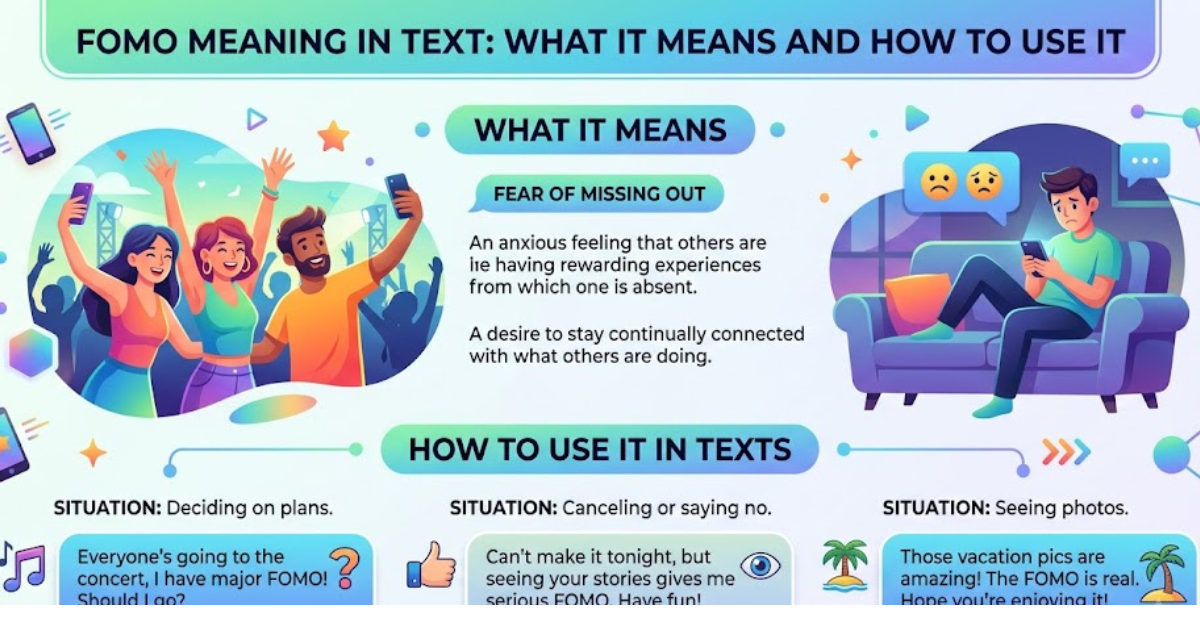
FOMO stands for “Fear Of Missing Out.”
In texting and online communication, FOMO describes the feeling that others are experiencing something exciting, fun, or valuable without you. It often creates anxiety, curiosity, or a strong desire to participate.
Simple Definition
FOMO is the worry that you’re missing out on:
- Social events
- Opportunities
- Experiences
- Trends
- Conversations
- Special offers
Example in a Text Message
Friend: “We’re all going to the concert tonight.”
You: “Now I have serious FOMO!”
In this case, you’re expressing disappointment or concern about not being able to join the event.
The Origin of FOMO
Although the concept has existed for generations, the term FOMO became widely popular with the rise of social media platforms such as:
- Snapchat
- TikTok
- X (formerly Twitter)
As people began sharing highlights of their lives online, others often felt they were missing exciting experiences. This emotional reaction became known as Fear Of Missing Out.
Today, the acronym is used in everyday conversations, marketing campaigns, and digital culture worldwide.
How FOMO Is Used in Text Conversations
People use FOMO in different ways depending on the context.
1. Missing a Social Event
This is the most common usage.
Example:
“Everyone’s posting pictures from the beach trip. I’m getting major FOMO.”
2. Missing a Trend
Sometimes FOMO relates to popular trends or viral content.
Example:
“I haven’t watched the new series yet, and all my friends are talking about it. FOMO is real.”
3. Missing a Limited-Time Opportunity
Brands often create FOMO through special promotions.
Example:
“That sale ends tonight. Don’t let FOMO make you buy something you don’t need.”
4. Missing Professional Opportunities
FOMO can also appear in work-related situations.
Example:
“I skipped the networking event and now I’m feeling FOMO after seeing everyone’s posts.”
Common Examples of FOMO in Text
Here are some everyday examples you might encounter:
- “I’m having FOMO seeing everyone’s vacation photos.”
- “You should come with us unless you want FOMO later.”
- “The concert sold out and now I’ve got FOMO.”
- “Social media always gives me FOMO.”
- “I bought tickets because of FOMO.”
These examples show how flexible the term has become in casual communication.
FOMO Meaning on Social Media
While texting is one place you’ll see the acronym, social media is where FOMO thrives.
People often feel FOMO when they see:
- Travel photos
- Luxury experiences
- Parties
- Celebrations
- Lifestyle content
TikTok
Trending challenges and viral videos can create pressure to participate before the trend fades.
Snapchat
Because stories disappear after a short time, users may feel a stronger urge to stay active and avoid missing updates.
Event invitations, life updates, and social gatherings can trigger feelings of exclusion.
Why Do People Experience FOMO?
FOMO isn’t just internet slang—it reflects a real psychological phenomenon.
Social Connection
Humans naturally want to belong to groups and communities.
Comparison Culture
Social media often showcases people’s best moments rather than everyday reality.
Desire for Opportunities
People worry that passing on an event or decision may lead to regret later.
Fear of Exclusion
Being left out of conversations or activities can create emotional discomfort.
Researchers have linked excessive FOMO to increased social media use and feelings of stress or dissatisfaction.
Signs That You May Be Experiencing FOMO
You might be dealing with Fear Of Missing Out if you:
- Constantly check social media
- Feel anxious when friends make plans without you
- Struggle to enjoy your current activities
- Compare your life to others online
- Frequently regret saying no to invitations
Recognizing these signs can help you manage them more effectively.
FOMO vs. JOMO: What’s the Difference?
A term often associated with FOMO is JOMO, which stands for “Joy Of Missing Out.”
| FOMO | JOMO |
| Fear of missing experiences | Happiness with your choices |
| Anxiety-driven | Contentment-driven |
| Focus on what others are doing | Focus on personal well-being |
| Can increase stress | Can reduce stress |
Example
FOMO: “Everyone’s at the party and I’m missing out.”
JOMO: “I’m staying home, relaxing, and enjoying my evening.”
The rise of JOMO reflects a growing focus on mental health and mindful living.
When Should You Use FOMO in a Text?
You can use the term casually when:
- Talking about social events
- Discussing trends
- Referring to online experiences
- Describing feelings of exclusion
- Joking with friends
Example Messages
- “Send pictures! I already have FOMO.”
- “You’re giving me vacation FOMO.”
- “I almost bought it because of FOMO.”
- “Everyone’s there except me—major FOMO.”
Because it’s widely recognized, most people will understand the meaning immediately.
Practical Tips for Managing FOMO
If you frequently experience Fear Of Missing Out, consider these strategies:
Limit Social Media Consumption
Reducing screen time can minimize unnecessary comparisons.
Focus on Your Priorities
Not every event or opportunity aligns with your goals.
Practice Gratitude
Appreciating what you already have can reduce feelings of scarcity.
Remember Social Media Isn’t Reality
Most people share highlights, not the complete picture.
Embrace JOMO
Learn to enjoy the opportunities you choose rather than worrying about those you miss.
Key Takeaways
- FOMO stands for Fear Of Missing Out.
- It’s commonly used in texting, social media, and online conversations.
- The term describes anxiety about missing experiences, opportunities, or events.
- Social media has significantly increased the popularity of the concept.
- FOMO can affect emotional well-being if it becomes excessive.
- Practicing mindfulness and limiting comparisons can help reduce FOMO.
Frequently Asked Questions
What is the FOMO meaning in text messages?
FOMO means Fear Of Missing Out. It is used when someone feels they’re missing an exciting event, opportunity, or experience that others are enjoying.
Is FOMO a positive or negative term?
FOMO is generally considered negative because it describes anxiety or worry about being left out. However, people often use it humorously in casual conversations.
What does “I have FOMO” mean?
When someone says “I have FOMO,” they mean they feel they’re missing something important, fun, or valuable happening elsewhere.
Is FOMO only used on social media?
No. Although social media helped popularize the term, FOMO is commonly used in text messages, emails, workplace discussions, and everyday conversations.
What is the opposite of FOMO?
The opposite is JOMO, which stands for Joy Of Missing Out. It refers to feeling happy and content with your decision not to participate in something.
Why is FOMO so common today?
FOMO is more common because social media provides constant updates about other people’s activities, making comparisons easier and more frequent than ever before.
Conclusion
Understanding the fomo meaning in text can help you navigate modern digital conversations with confidence. At its core, FOMO refers to the fear that you’re missing out on experiences, opportunities, or social interactions that others are enjoying. From text messages and group chats to Instagram stories and TikTok trends, the term has become a major part of online culture.
While experiencing occasional FOMO is normal, it’s important to remember that social media often highlights only the best moments of people’s lives. By focusing on your own goals, practicing gratitude, and embracing a healthy balance between connection and contentment, you can keep FOMO in perspective and enjoy your own experiences more fully.