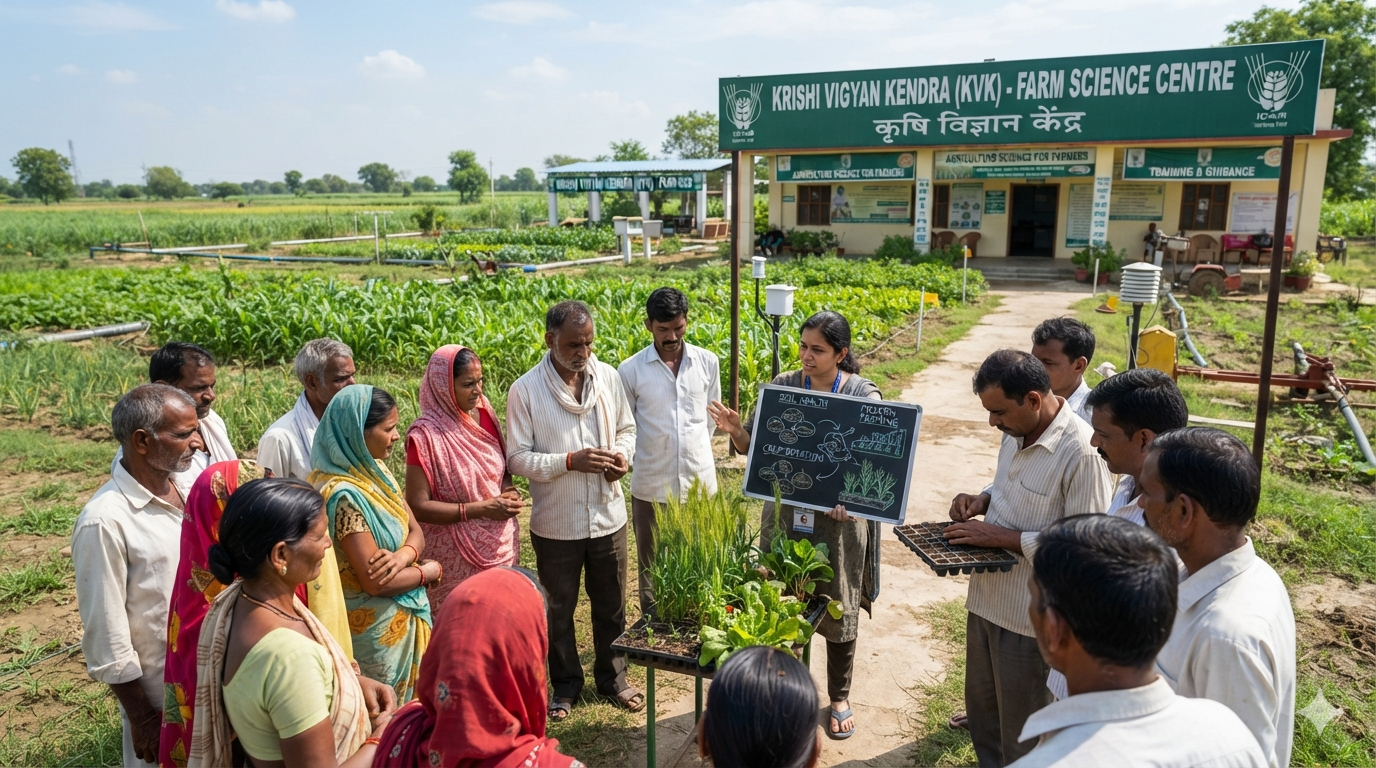
Have you ever wondered how farmers get new ideas to grow better crops? The answer is often a KVK. A KVK, or Krishi Vigyan Kendra, is a special place in your district that acts like a bridge. It connects the world of science with the world of farming. Think of it as a neighborhood school where farmers learn modern secrets to grow more food. Whether you are an expert farmer or just starting out, a KVK is there to help you succeed. It turns hard research into simple steps you can use in your own fields.
What is a KVK?
A KVK is an agricultural extension center in India. These centers are run by the government to help rural communities. They bring new technology directly to the farmer. You can find one in almost every district across the country. They are more than just offices; they are resource centers for all things related to farming.
Why Do Farmers Need a KVK?
Farming is changing fast. A KVK helps you stay ahead by teaching you about new seeds, better tools, and smart water use. Without this agricultural extension service, it would be hard to know which new methods work best. The experts at your local KVK know the soil and climate in your area, so their advice is always just right for your land.
On-Farm Testing for Better Results
One of the main jobs of a KVK is to test new ideas. Before a new crop variety is released, the KVK tries it on local farms. This is called on-farm testing. It ensures that any new agricultural technology will actually grow well in your specific village. You get to see the results with your own eyes before trying it yourself.
Frontline Demonstrations: Seeing is Believing
Seeing a new method work is much better than just reading about it. KVK centers hold “Frontline Demonstrations” on farmers’ fields. They show how new farming methods increase the harvest. If your neighbor uses a KVK tip and gets a bigger crop, you will want to try it too! This is how better farming spreads through the community.
Skill Development and Training
Do you want to learn how to fix a tractor or package your vegetables? The KVK provides training for farmers, rural youth, and farm women. They teach you skill development for jobs like seed production or beekeeping. These skills help you earn extra money outside of just selling your main crops.
Soil Health Management
Your soil is the most important part of your farm. A KVK offers soil testing services to help you understand your land. They tell you exactly which nutrients your soil needs. This stops you from wasting money on the wrong fertilizers and helps your plants grow big and healthy.
Access to Quality Seeds and Planting Materials
Finding good seeds can be a big challenge. Luckily, the KVK often produces and shares quality seeds and planting materials. When you get seeds from the KVK, you know they are tested and high-yielding. This gives your crops the best possible start to grow strong and resist diseases.
Using Digital Tools for Farming
In today’s world, a KVK also uses computers and phones to help you. They send weather updates and market prices to your mobile device. Through ICT (Information and Communication Technology), you can get answers to your problems quickly. You do not always have to travel to the office to get expert help.
Connecting Farmers and Scientists
Sometimes, you might have a problem that even the books cannot solve. The KVK acts as a two-way link. They take your questions to top scientists and bring the solutions back to you. They also take your feedback to the researchers so they can invent tools that you actually need.
Supporting Agri-Entrepreneurship
Many young people are now starting small businesses in their villages. A KVK supports agri-entrepreneurship by teaching you how to process food or start a nursery. They give you the confidence to turn your farm produce into a profitable business. This helps keep the local economy strong and growing.
Impact on Crop Productivity
The main goal of every KVK is to make your farm work better. By using scientific knowledge and better management, farmers see a big jump in their total harvest. Higher productivity means more food for your family and more money in your pocket at the end of the year.
Frequently Asked Questions (FAQs)
1. Where can I find my nearest KVK? You can visit the official Indian Council of Agricultural Research (ICAR) website or search online for “KVK near me” to find your district center.
2. Is there a fee for training at the KVK? Most training programs and advisory services provided by a KVK are free or very low-cost as they are funded by the government to support farmers.
3. Can a KVK help me if I have a pest problem? Yes! You can take a sample of your sick plant or pests to the KVK. Their experts will identify the problem and tell you exactly how to treat it.
4. Does the KVK only help with crops? No, they also provide help with livestock production, poultry, fish farming, and other activities to make your farm more diverse and profitable.
5. How often should I get my soil tested? It is a good practice to test your soil through your local KVK every two to three years to ensure your nutrient management remains balanced.
6. Can rural youth join KVK programs? Absolutely. The KVK has special programs designed for young people to help them learn modern farming skills and start their own agricultural businesses.
Conclusion
A KVK is a true partner in your farming journey. From testing new seeds to teaching you how to process your harvest, they are there every step of the way. If you have not visited your local KVK yet, make it a plan for this month! Have you ever used advice from a KVK, or do you have a question about a specific crop? Leave a comment below and let’s keep the conversation growing!