A perianal abscess can be incredibly painful, and many people fear the same problem will come back after treatment. If you are wondering how to prevent perianal abscess from returning, the answer involves a combination of proper wound care, good hygiene, healthy bowel habits, and addressing any underlying medical conditions.
Although not every recurrence can be prevented, taking the right steps can significantly reduce your risk. In this guide, you’ll learn why perianal abscesses return, what daily habits can help, warning signs to watch for, and when to seek medical advice.
Understanding Why Perianal Abscesses Come Back
A perianal abscess is a collection of infected pus that develops near the anus, usually because a small gland inside the anal canal becomes blocked and infected.
Even after successful drainage or treatment, some people experience another abscess. This can happen due to:
- An untreated or hidden anal fistula (an abnormal tunnel connecting the infected gland to the skin)
- Incomplete healing after drainage
- Chronic conditions like Crohn’s disease
- Diabetes or a weakened immune system
- Repeated irritation or infection in the anal area
Research shows that a significant number of people who develop a perianal abscess may later develop an anal fistula, which is one of the most common reasons for recurrence.
Proper Wound Care After Abscess Drainage
Following your surgeon’s aftercare instructions is one of the most important steps in reducing the chance of another infection.
Keep the Area Clean and Dry
After drainage, gently wash the area with warm water during bathing. Avoid harsh soaps, strong fragrances, or aggressive scrubbing, as they can irritate the sensitive skin around the anus.
Pat the area dry with a clean, soft towel or use a hair dryer on a cool setting if recommended by your healthcare provider.
Take Sitz Baths Regularly
Sitz baths involve sitting in warm, shallow water for around 10–15 minutes. They may help:
- Keep the area clean
- Improve comfort
- Promote healing by improving local blood flow
- Help relax the anal muscles
Your doctor can advise how often they are appropriate during your recovery.
Complete All Prescribed Treatments
If you are given antibiotics or other medications, use them exactly as prescribed. However, antibiotics alone usually do not cure a perianal abscess; drainage is commonly the main treatment when an abscess is present.
Maintain Healthy Bowel Habits to Reduce Irritation
Straining and hard stools can irritate the anal area and make healing more difficult.
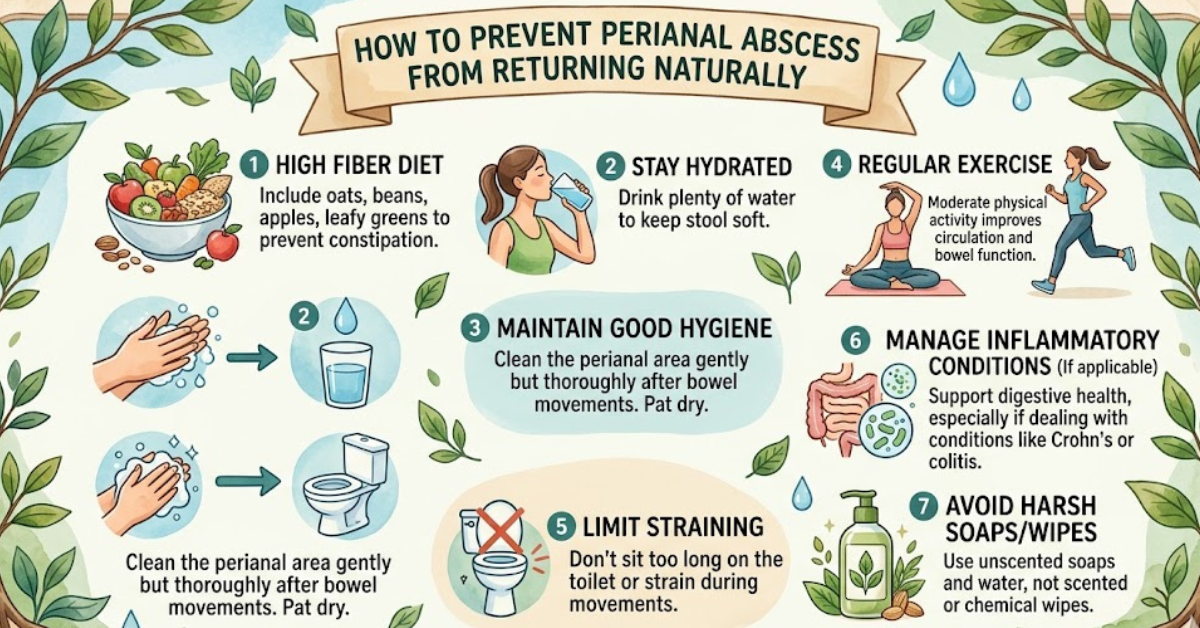
Increase Your Fiber Intake
A fiber-rich diet helps create softer, easier-to-pass stools. Good sources include:
- Fruits such as apples, pears, and berries
- Vegetables like broccoli and carrots
- Whole grains
- Beans and lentils
- Nuts and seeds
Most adults benefit from approximately 25–38 grams of fiber per day, depending on age and sex.
Stay Hydrated
Drinking enough water helps fiber work effectively and reduces the risk of constipation.
Avoid Excessive Straining
Try not to sit on the toilet for long periods or force bowel movements. If constipation is a recurring problem, ask a healthcare professional about safe options such as stool softeners or other treatments.
Practice Good Anal Hygiene
Cleanliness plays an important role in preventing irritation and bacterial buildup.
Some helpful habits include:
- Cleaning gently after bowel movements
- Using unscented toilet paper or water to rinse the area
- Changing sweaty or dirty underwear promptly
- Wearing loose, breathable cotton underwear
Avoid over-cleaning, as excessive wiping or using irritating products can damage the skin barrier.
Address Underlying Health Conditions
Some medical issues can increase the likelihood of recurring abscesses.
Manage Diabetes Effectively
High blood sugar can impair the immune response and slow wound healing. Keeping diabetes well controlled can reduce infection risks.
Get Evaluated for Crohn’s Disease
People with repeated perianal abscesses, especially alongside symptoms like chronic diarrhea, abdominal pain, weight loss, or blood in the stool, may need evaluation for inflammatory bowel disease such as Crohn’s disease.
Discuss Immune System Concerns
Certain medications or health conditions that affect immunity can make infections more likely. Your doctor can help determine whether further testing or treatment changes are needed.
Watch for Signs of a Developing Abscess
Early medical attention may prevent complications and allow faster treatment.
Common warning signs include:
- A painful lump near the anus
- Increasing redness or swelling
- Warm skin around the area
- Pus or unusual discharge
- Fever or chills
- Increasing pain while sitting or moving
Do not try to squeeze or drain an abscess at home, as this can worsen the infection and spread bacteria.
Treat Anal Fistulas to Prevent Recurrence
A hidden anal fistula is one of the leading reasons why a perianal abscess keeps coming back.
If your doctor suspects a fistula, they may recommend tests or a procedure to identify and treat it. Treatments vary depending on the location and complexity of the fistula and may include procedures designed to eliminate the tract while protecting bowel control.
Managing a fistula effectively can greatly reduce the chance of future abscesses.
Lifestyle Tips That Support Long-Term Prevention
Small daily choices can contribute to better healing and overall health.
Maintain a Balanced Diet
Focus on foods that support digestion and immune function, including:
- Lean proteins
- Vegetables and fruits
- Whole grains
- Healthy fats such as olive oil, nuts, and fish
Avoid Smoking
Smoking can impair blood flow and slow tissue repair. Quitting smoking supports better healing and overall health.
Stay Physically Active
Regular movement helps promote healthy digestion, reduces constipation risk, and supports metabolic health.
Key Takeaways: How to Lower the Risk of a Perianal Abscess Returning
To reduce the chance of recurrence:
- Follow all post-treatment care instructions
- Keep the area clean without causing irritation
- Take sitz baths if recommended
- Eat a high-fiber diet and drink enough fluids
- Avoid constipation and prolonged straining
- Control conditions like diabetes
- Get checked for an anal fistula if abscesses repeatedly return
- Seek medical care early if new symptoms appear
Frequently Asked Questions
Can a perianal abscess come back after surgery?
Yes. Even after successful drainage or surgery, a perianal abscess can return, especially if an underlying fistula or medical condition remains untreated.
What is the best way to prevent a perianal abscess from returning?
The best approach includes proper hygiene, following recovery instructions, preventing constipation, and identifying underlying causes such as an anal fistula or Crohn’s disease.
Does diet help prevent recurring perianal abscesses?
A healthy diet cannot guarantee prevention, but adequate fiber and hydration can support regular bowel movements and reduce irritation around the anal area.
How long does it take for a perianal abscess to heal?
Healing time varies depending on the size of the abscess and the treatment performed. Many people improve over several weeks, but complete healing can take longer in some cases.
Should I see a doctor if my perianal abscess keeps returning?
Yes. Repeated abscesses should always be evaluated because they may indicate a fistula, inflammatory bowel disease, or another issue requiring specific treatment.
Can poor hygiene cause a perianal abscess?
Poor hygiene alone is not usually the main cause. Most perianal abscesses begin from blocked anal glands, though good hygiene can help protect the skin and support recovery.
Conclusion
Knowing how to prevent perianal abscess from returning can help you take practical steps toward long-term comfort and better anal health. While recurrence is sometimes unavoidable, careful wound care, gentle hygiene, healthy bowel habits, and treatment of underlying conditions can greatly reduce your risk.
If you notice new pain, swelling, drainage, or fever, do not ignore the symptoms. Early medical evaluation can lead to faster treatment and help prevent more serious complications. Applying these preventive habits consistently can make a meaningful difference in protecting your health.