Have you ever typed a sentence like “I am grately thankful” and wondered whether it looked right? You’re not alone. Many English learners and native speakers alike get confused about grately or greatly, especially because the words sound similar when spoken quickly.
The good news is that the answer is straightforward. In this guide, you’ll learn which spelling is correct, why the confusion happens, how to use the word properly, and practical tips to avoid making the mistake in the future.
Understanding the Difference Between Grately and Greatly
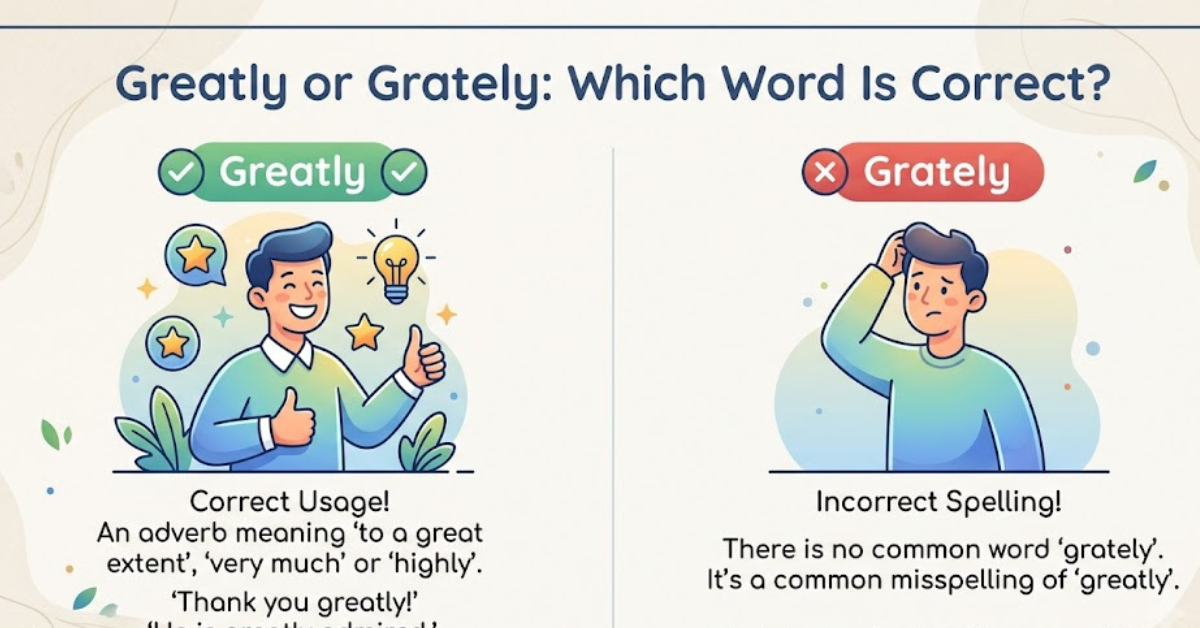
When comparing grately or greatly, only one of them is considered a standard English word.
- Greatly = Correct spelling
- Grately = Incorrect spelling in modern English usage
The adverb greatly means:
- To a large extent
- Very much
- Significantly
- Extremely
Examples of Greatly
- Your support is greatly appreciated.
- The new software has greatly improved productivity.
- She was greatly affected by the news.
- We are greatly thankful for your help.
In each example, greatly emphasizes the degree or extent of something.
Is “Grately” a Real Word?
One of the most common questions people ask is whether grately is actually a word.
In modern English dictionaries, grately is generally considered a misspelling of greatly. It does not have an accepted meaning in contemporary standard English.
Most spell-checkers, grammar tools, and style guides will flag grately as an error and suggest greatly instead.
Why Do People Write “Grately”?
Several factors contribute to this spelling mistake:
1. Pronunciation Similarities
In casual speech, the pronunciation of greatly can sometimes sound like grately, especially depending on accent or regional dialect.
2. Typing Errors
People often type quickly and accidentally omit the letter combination that forms the correct word.
3. Confusion With Other Words
English contains many words ending in:
- -ly
- -ately
- -itely
Examples include:
- Definitely
- Absolutely
- Fortunately
- Ultimately
Because of these patterns, some writers mistakenly assume grately follows a similar structure.
What Does Greatly Mean?
To use the word correctly, it helps to understand its meaning in context.
Greatly as an Adverb
The word greatly comes from the adjective great and functions as an adverb.
It modifies verbs, adjectives, or entire statements to indicate a high degree or significant extent.
Common Meanings
Greatly can mean:
- Very much
- Considerably
- Significantly
- To a large degree
Examples in Everyday Communication
- The company’s profits increased greatly this year.
- I was greatly relieved after hearing the results.
- Technology has greatly changed the way we communicate.
- Their contribution was greatly valued.
Greatly in Professional Writing
The word greatly appears frequently in business, academic, and professional communication.
Common Workplace Phrases
You may encounter expressions such as:
- Greatly appreciated
- Greatly improved
- Greatly enhanced
- Greatly reduced
- Greatly influenced
- Greatly benefited
Example
“Your feedback is greatly appreciated and helps us improve our services.”
This phrase is commonly used in customer service, corporate emails, and professional correspondence.
Grately or Greatly: Side-by-Side Comparison
| Feature | Grately | Greatly |
| Standard English Word | No | Yes |
| Accepted by Dictionaries | No | Yes |
| Correct for Formal Writing | No | Yes |
| Commonly Misspelled | Yes | No |
| Means “to a large extent” | No | Yes |
The comparison makes it clear that greatly is the spelling you should use in virtually all situations.
Common Sentences Corrected
Here are some examples showing the difference between incorrect and correct usage.
Incorrect
I am grately thankful for your support.
Correct
I am greatly thankful for your support.
Incorrect
The project was grately improved.
Correct
The project was greatly improved.
Incorrect
Your efforts are grately appreciated.
Correct
Your efforts are greatly appreciated.
How to Remember the Correct Spelling
If you frequently confuse grately or greatly, these memory tricks can help.
Think of the Root Word
The correct word comes from:
Great + ly = Greatly
Since the base word is great, keep the full spelling before adding -ly.
Use the Appreciation Test
Many people encounter the word in this phrase:
“Greatly appreciated.”
Because this phrase is so common, remembering it can reinforce the correct spelling.
Rely on Grammar Tools
Modern writing tools such as spell-checkers and grammar software can quickly identify grately and suggest the proper correction.
Examples of Greatly in Different Contexts
Business
- Employee training has greatly increased efficiency.
- Customer satisfaction has greatly improved.
Education
- Reading regularly can greatly enhance vocabulary.
- Online resources have greatly expanded learning opportunities.
Personal Communication
- I am greatly grateful for your kindness.
- Your advice helped me greatly.
Technology
- Artificial intelligence has greatly influenced modern industries.
- Cloud computing has greatly simplified data management.
Common Grammar Mistakes Related to Greatly
People who misspell greatly often make similar mistakes with other adverbs.
Frequently Confused Words
| Incorrect | Correct |
| Definately | Definitely |
| Seperately | Separately |
| Grately | Greatly |
| Recieve | Receive |
| Occured | Occurred |
Paying attention to common spelling patterns can improve overall writing accuracy.
Why Correct Spelling Matters
Some people assume small spelling mistakes don’t matter, but they can affect how your writing is perceived.
Correct spelling helps:
- Improve professionalism
- Increase readability
- Build credibility
- Prevent misunderstandings
- Create stronger first impressions
Whether you’re writing emails, academic papers, resumes, or social media posts, using greatly correctly demonstrates attention to detail.
Key Takeaways
- Greatly is the correct English word.
- Grately is considered a misspelling.
- Greatly means to a large extent, very much, or significantly.
- The word is commonly used in professional, academic, and everyday writing.
- Remember the formula: Great + ly = Greatly.
- Spell-check tools can help catch the error before publication.
Frequently Asked Questions
Is grately a correct word?
No. In standard modern English, grately is generally treated as a misspelling. The correct word is greatly.
Which is correct: grately or greatly?
Greatly is the correct spelling. It means “to a large extent” or “very much.”
What does greatly mean?
Greatly is an adverb used to describe something happening to a significant degree. For example, “Your help was greatly appreciated.”
Why do people write grately instead of greatly?
The mistake often occurs because of pronunciation habits, typing errors, or confusion with other English spelling patterns.
Can I use greatly in formal writing?
Yes. Greatly is widely accepted in professional emails, business documents, academic papers, and official communications.
What is a synonym for greatly?
Common synonyms include:
- Significantly
- Considerably
- Extremely
- Substantially
- Very much
Conclusion
When deciding between grately or greatly, the correct choice is always greatly. It is the accepted English adverb used to express a significant degree or extent of something, while grately is simply a spelling mistake.
Understanding this distinction can improve the clarity and professionalism of your writing. The next time you want to express appreciation, improvement, or impact, remember the simple rule: great + ly = greatly. Apply this tip consistently, and you’ll avoid one of the most common spelling errors in English.