Have you ever received a text that simply said “SMH” and wondered what the sender was trying to say? You’re not alone. Internet slang evolves quickly, and abbreviations can sometimes leave people confused.
The SMH meaning is one of the most searched internet acronyms because it appears everywhere—from text messages and social media posts to online forums and comment sections. Understanding what it means can help you communicate more effectively in today’s digital world.
In this guide, you’ll learn what SMH stands for, where it originated, how to use it correctly, common examples, and when you should avoid using it.
What Does SMH Mean?
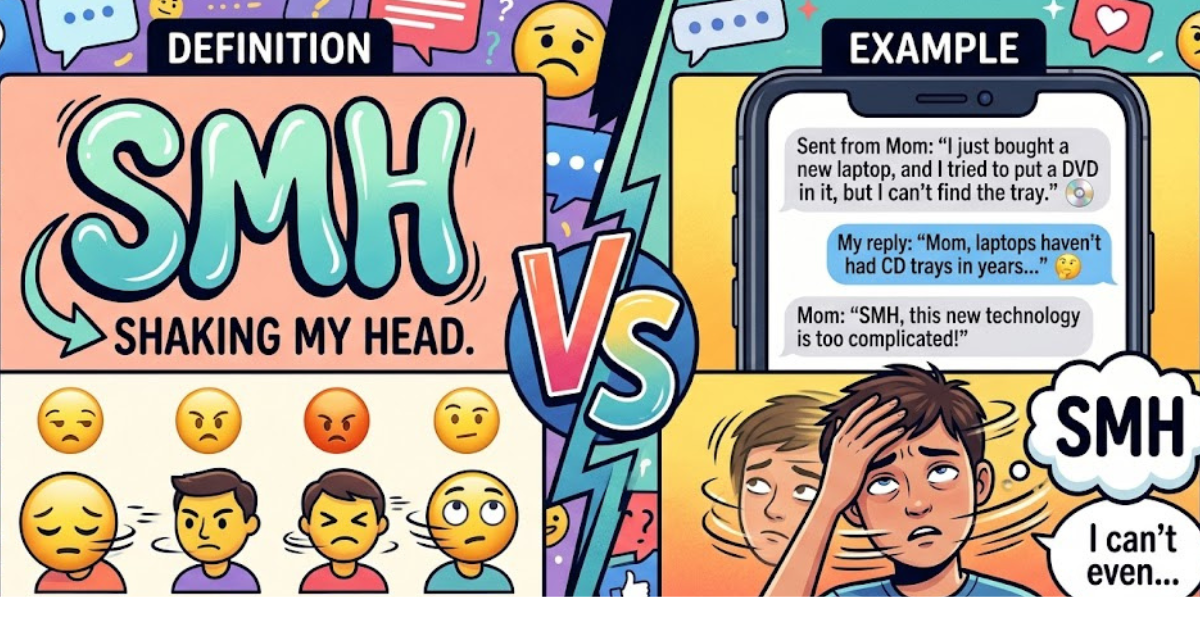
SMH stands for “Shaking My Head.”
People use it to express disappointment, frustration, disbelief, embarrassment, or disapproval of something they have seen, heard, or experienced.
Instead of typing a full reaction, users simply write “SMH” to show they are figuratively shaking their head at a situation.
Example:
Friend: “I forgot my wallet at home for the third time this week.”
Response: “SMH.”
In this context, SMH communicates mild frustration or disbelief without requiring a lengthy explanation.
The Origin of SMH
Like many internet abbreviations, SMH gained popularity during the rise of online messaging platforms, forums, and social media networks.
The phrase became widely recognized in the early 2000s through:
- Internet chat rooms
- Online discussion boards
- Twitter (now X)
- Text messaging
As character limits encouraged shorter communication, abbreviations such as LOL, BRB, IMO, and SMH became part of everyday digital language.
Today, SMH is understood by millions of internet users worldwide.
Why People Use SMH
The popularity of SMH comes from its simplicity. It quickly conveys an emotional reaction without requiring a detailed response.
Common reasons people use it include:
- Expressing disappointment
- Showing disbelief
- Reacting to poor decisions
- Responding to embarrassing situations
- Highlighting something ridiculous
- Communicating frustration humorously
Example
“Someone parked across two parking spaces. SMH.”
The acronym instantly communicates annoyance and judgment.
Different Situations Where SMH Is Used
SMH for Disappointment
One of the most common uses is expressing disappointment when expectations are not met.
Example:
“The team lost after leading the entire game. SMH.”
SMH for Disbelief
People often use SMH when they can’t believe something happened.
Example:
“He spent his rent money on a gaming console. SMH.”
SMH for Frustration
The acronym can signal irritation about recurring problems.
Example:
“The internet went down again during my meeting. SMH.”
SMH for Humor
Sometimes SMH is used playfully rather than seriously.
Example:
“My dog stole my sandwich while I was making lunch. SMH.”
In this case, the speaker is amused rather than genuinely upset.
SMH in Text Messages
Text messaging is one of the most common places you’ll encounter SMH.
Examples
- “You forgot my birthday? SMH.”
- “The movie ended with no explanation. SMH.”
- “I locked my keys in the car again. SMH.”
In texting, the meaning often depends on context and tone.
SMH on Social Media
Social media platforms have made internet slang part of mainstream communication.
You’ll frequently see SMH in:
- Facebook comments
- Instagram captions
- TikTok discussions
- Reddit threads
- X (Twitter) posts
Example Post
“People are already decorating for Christmas in October. SMH.”
The user is expressing mild disbelief or criticism.
How to Use SMH Correctly
Using SMH is straightforward, but understanding context matters.
Best Practices
- Use it when reacting to something disappointing.
- Use it to express disbelief or frustration.
- Keep the audience in mind.
- Understand the tone of the conversation.
Correct Usage
- “He missed the flight because he overslept. SMH.”
- “Another software update broke everything. SMH.”
Less Appropriate Usage
In professional communication, SMH may appear informal or unclear.
Instead of:
“SMH at the project’s delays.”
Consider:
“I’m disappointed by the project’s delays.”
When Not to Use SMH
Although widely understood, SMH isn’t suitable in every situation.
Avoid using it in:
- Formal business emails
- Academic papers
- Professional reports
- Job applications
- Official correspondence
Using clear language is usually more effective in professional settings.
SMH vs Other Popular Internet Acronyms
Internet slang can be confusing because many abbreviations express similar emotions.
SMH vs LOL
SMH: Shaking My Head (disappointment or disbelief)
LOL: Laughing Out Loud (amusement)
Example:
“SMH, he forgot his shoes.”
“LOL, that’s actually hilarious.”
SMH vs Facepalm
Both express frustration.
However:
- SMH is typically written text.
- Facepalm often refers to a visual gesture.
SMH vs OMG
OMG: Oh My God
SMH: Shaking My Head
OMG expresses surprise.
SMH expresses disappointment or disbelief.
Variations of SMH
Internet users have created several variations over time.
SMDH
SMDH = Shaking My Damn Head
This version emphasizes stronger frustration or disbelief.
SMFH
SMFH = Shaking My F*ing Head**
This version is more intense and typically used in informal online spaces.
Because these variations contain stronger language, they may not be appropriate in all contexts.
Why SMH Became So Popular
Several factors contributed to SMH’s popularity:
Efficiency
Typing three letters is faster than writing a full reaction.
Emotional Expression
It quickly conveys feelings without lengthy explanations.
Social Media Culture
Platforms encourage short, impactful communication.
Universal Understanding
Many internet users recognize the acronym regardless of age or location.
Examples of SMH in Everyday Conversations
Here are some realistic examples.
Example 1
Person A: “I forgot to save my work before my computer crashed.”
Person B: “SMH.”
Example 2
Person A: “I spent an hour looking for my glasses and they were on my head.”
Person B: “SMH”
Example 3
Person A: “The restaurant forgot half our order.”
Person B: “SMH. That’s frustrating.”
These examples show how context changes the tone from serious to humorous.
Common Misunderstandings About SMH
Many people assume SMH always means anger.
That’s not necessarily true.
Depending on context, it can express:
- Mild annoyance
- Friendly teasing
- Disappointment
- Frustration
- Disbelief
- Amusement
The surrounding conversation usually determines the intended meaning.
Key Takeaways
- SMH stands for “Shaking My Head.”
- It expresses disappointment, disbelief, frustration, or disapproval.
- The acronym became popular through texting and social media.
- Context determines whether the tone is serious or humorous.
- SMH is generally suitable for casual communication.
- Avoid using it in formal or professional writing.
Frequently Asked Questions
What is the full SMH meaning in texting?
SMH means “Shaking My Head.” It is commonly used in text messages to show disappointment, disbelief, frustration, or disapproval.
Is SMH considered rude?
Not usually. However, it can come across as judgmental depending on the situation and the relationship between the people communicating.
What does SMH mean on Instagram?
On Instagram, SMH typically expresses disbelief or disappointment about a post, comment, trend, or situation being discussed.
What is the difference between SMH and LOL?
SMH expresses frustration or disbelief, while LOL means “Laughing Out Loud” and is used to show amusement.
What does SMDH mean?
SMDH stands for “Shaking My Damn Head.” It’s a stronger version of SMH used to emphasize frustration or disappointment.
Is SMH still popular?
Yes. Despite the constant evolution of internet slang, SMH remains widely used across social media platforms, messaging apps, and online communities.
Conclusion
Understanding the SMH meaning helps you navigate modern digital conversations with confidence. Whether you’re reading social media comments, texting friends, or browsing online discussions, you’ll likely encounter this popular acronym regularly.
At its core, SMH is a simple way to express disappointment, disbelief, or frustration in just three letters. Like many internet expressions, its exact tone depends on context, but its message is usually easy to recognize once you know what it stands for.
The next time you see “SMH” in a conversation, you’ll know exactly what the sender means—and perhaps even find yourself using it too.