
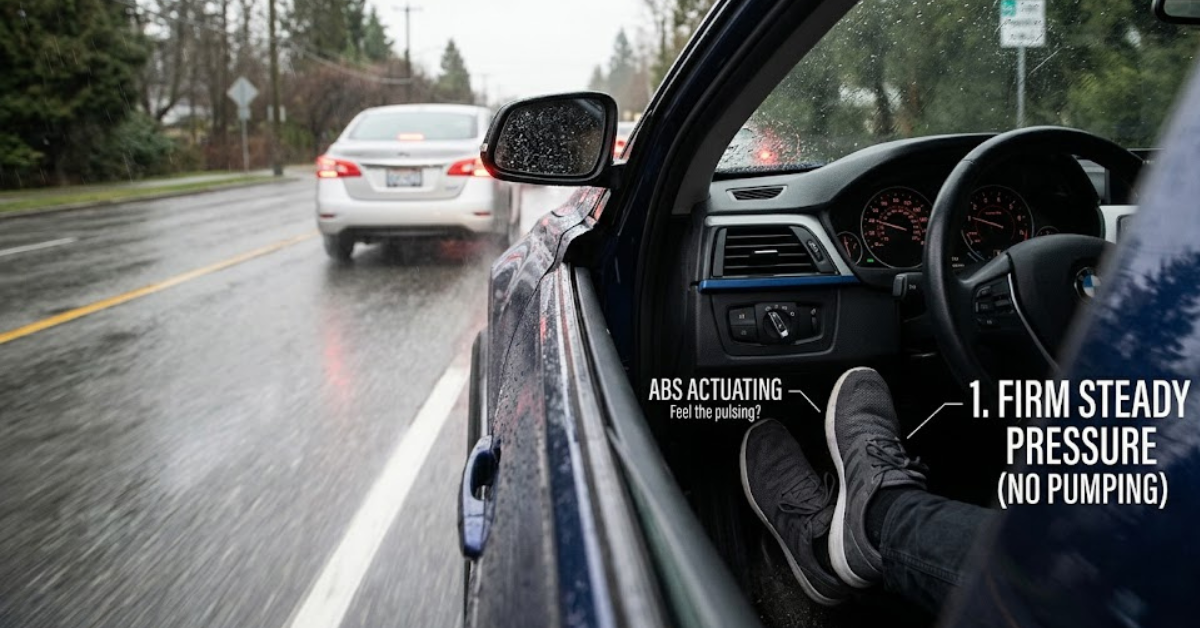
Imagine driving down the road when a car suddenly pulls out in front of you. In a split second, your reaction can make the difference between a close call and a serious accident. Knowing how should you use anti-lock brakes when you need to stop in an emergency is a crucial driving skill that can help you maintain control of your vehicle during sudden braking situations.
Anti-lock braking systems (ABS) are designed to prevent your wheels from locking up during hard braking. However, many drivers still misunderstand how ABS works and may use the brakes incorrectly during an emergency. This guide explains the proper technique, common mistakes to avoid, and how anti-lock brakes improve vehicle safety.
What Are Anti-Lock Brakes ABS?
Anti-lock brakes, commonly known as ABS, are a safety feature found in most modern vehicles. The system uses sensors to monitor wheel speed and automatically adjusts brake pressure when it detects that a wheel is about to lock.
Without ABS, slamming on the brakes can cause the wheels to stop rotating, leading to a loss of steering control. ABS helps prevent this by rapidly applying and releasing brake pressure many times per second.
Key Benefits of Anti-Lock Braking Systems
ABS offers several important safety advantages:
- Allows you to maintain steering control while braking hard
- Reduces the chance of skidding on many road surfaces
- Helps improve vehicle stability during emergency stops
- Gives drivers more control when avoiding obstacles
How Should You Use Anti-Lock Brakes When You Need to Stop in an Emergency?
The correct method for using anti-lock brakes in an emergency is simple: brake hard, keep steady pressure on the pedal, and continue steering if needed.
Follow these steps:
1. Press the Brake Pedal Firmly
When an emergency happens, immediately press the brake pedal as hard as necessary. Unlike older braking systems, you do not need to pump the brakes when your vehicle has ABS.
The system will automatically manage the braking pressure for you.
2. Keep Your Foot Firmly on the Brake
Many drivers feel a pulsing sensation or hear a grinding or buzzing noise when ABS activates. This is completely normal and means the system is working.
Do not release the brake pedal because of the vibration. Maintain firm, consistent pressure until your vehicle comes to a stop or the danger has passed.
3. Steer Around Obstacles If Necessary
One of the biggest advantages of ABS is that it allows you to steer while braking. If you have enough space, look where you want the vehicle to go and steer around obstacles while keeping your foot on the brake.
Avoid making sudden, aggressive steering movements that could cause you to lose control.
Should You Pump Anti-Lock Brakes?
No, you should never pump anti-lock brakes during an emergency stop.
Before ABS became common, drivers were taught to pump their brakes to prevent wheel lock-up. Modern anti-lock braking systems already perform this action much faster and more effectively than a person can.
Pumping the brakes can actually reduce braking performance and increase your stopping distance.
What Does It Feel Like When ABS Activates?
If you have never experienced ABS engagement, the sensation can be surprising.
You may notice:
- A rapid vibration or pulsing in the brake pedal
- Clicking, grinding, or buzzing sounds
- Slight movement in the brake pedal
These signs indicate that the anti-lock brake system is actively preventing wheel lock-up. Keep pressing the brake pedal and allow the system to do its job.
Do Anti-Lock Brakes Always Reduce Stopping Distance?
ABS often helps reduce stopping distances on dry and wet roads, but not in every situation.
On certain surfaces such as:
- Loose gravel
- Deep snow
- Sand
A vehicle with locked wheels may sometimes stop in a shorter distance, although it will be harder to control. The main purpose of ABS is to help drivers maintain steering control and stability during emergency braking.
Common ABS Braking Mistakes to Avoid
Even experienced drivers can make errors during a sudden stop.
Avoid these common mistakes:
- Pumping the brake pedal
- Taking your foot off the brake when you feel pulsing
- Turning the steering wheel too sharply
- Following other vehicles too closely
- Assuming ABS eliminates the need for safe driving habits
Remember, ABS is a valuable safety tool, but it cannot overcome excessive speed, poor tires, or dangerous road conditions.
Tips for Practicing Emergency Braking with ABS
Understanding your vehicle’s braking response before an emergency can make you a more confident driver.
Consider these tips:
- Practice in a safe, empty parking area.
- Learn how the ABS pedal vibration feels.
- Keep your tires properly inflated and maintained.
- Always maintain a safe following distance.
Regular practice helps your reactions become quicker and more controlled during real emergencies.
Frequently Asked Questions FAQs
When using anti-lock brakes in an emergency, should you pump the brakes?
No. You should press the brake pedal firmly and hold it down. The ABS automatically pumps the brakes for you at a much faster rate than you could manually.
What should you do if your ABS starts vibrating?
Keep applying firm pressure to the brake pedal. The vibration is a normal sign that the anti-lock braking system is working properly.
Can you steer while using anti-lock brakes?
Yes. One of the main advantages of ABS is that it allows you to maintain steering control while applying maximum braking force.
Do all vehicles have anti-lock brakes?
Most modern cars, trucks, and SUVs are equipped with ABS, but some older vehicles may not have this feature. Check your owner’s manual to confirm whether your vehicle has anti-lock brakes.
Is it safer to slam on the brakes with ABS?
In an emergency, you should apply the brakes quickly and firmly. ABS is designed to handle hard braking and helps prevent the wheels from locking, allowing you to maintain better control.
Conclusion
Understanding how should you use anti-lock brakes when you need to stop in an emergency can greatly improve your ability to respond to unexpected hazards on the road. The most important rule is simple: press the brake firmly, do not pump it, keep steady pressure, and steer safely around obstacles if necessary.
ABS is one of the most important vehicle safety technologies available today, but it works best when combined with responsible driving, proper vehicle maintenance, and awareness of road conditions. To become a safer driver, continue learning about defensive driving techniques and the safety features built into your vehicle.