
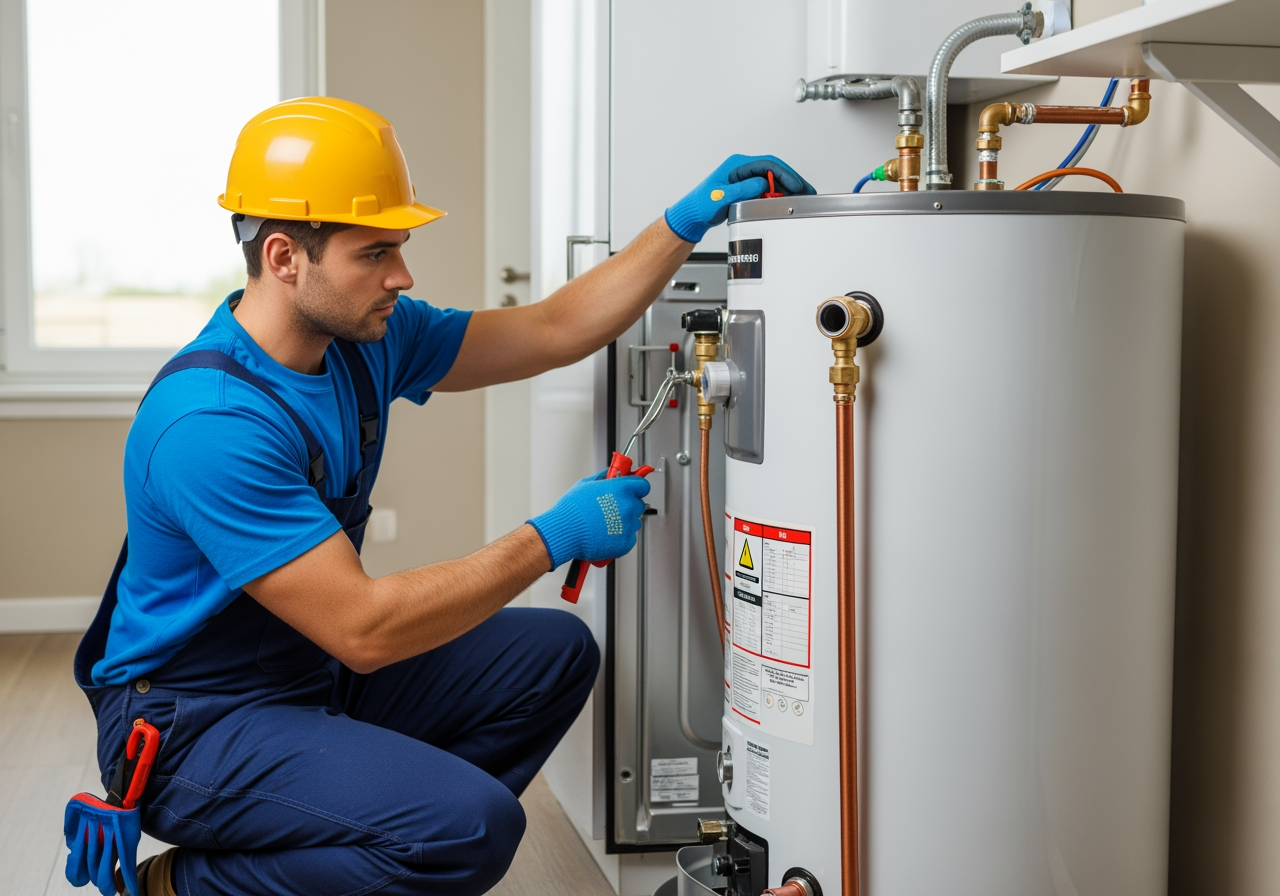
A dependable supply of hot water supports everyday life, from showers and laundry to washing dishes and cleaning. When a water heater begins making unusual noises, produces inconsistent temperatures, or leaves moisture on the floor, homeowners often face the same question: should the unit be repaired or replaced?
The right answer depends on the heater’s age, condition, energy source, symptoms, and overall operating cost. Understanding the warning signs can help you describe the problem clearly and make a more informed decision when a licensed plumbing professional evaluates the system.
Start by Identifying the Warning Signs
Water heater problems do not always begin with a complete loss of hot water. Early clues may include water that turns cold sooner than usual, temperatures that change during a shower, or a slow recovery after normal household use. These symptoms can result from a failing heating element, thermostat issue, sediment buildup, or another component that needs attention.
Sound can also provide useful information. Popping, crackling, or rumbling may occur when sediment collects inside a tank and the system heats around it. A leaking connection, valve, or tank can create visible moisture. Rust-colored water, unusual odors, or repeated pilot-light problems on a gas model also deserve prompt attention.
If water is pooling around the unit, the situation should not be ignored. Turn off the water supply if it is safe to do so, keep people away from electrical components, and contact a qualified professional. Gas odors require special caution: leave the area and follow local emergency guidance rather than attempting to diagnose the source yourself.
When Repair May Make Sense
Repair is often worth considering when the tank itself is in good condition and the problem is limited to a replaceable component. Examples may include a thermostat, heating element, pressure-relief valve, sensor, connection, or other part identified during a proper inspection.
A relatively newer unit with one isolated fault may be a reasonable repair candidate, particularly if it has been maintained and has not shown signs of corrosion or repeated failure. Repair can restore performance without the cost, disruption, and installation decisions that come with a full replacement.
Homeowners comparing their options may want to review Suncoast Plumbing water heater repair for information about professional service for electric, gas, hybrid, and tankless systems in Summerville and surrounding Charleston areas.
A repair should address the cause rather than only the visible symptom. Replacing a part without checking for related pressure, wiring, venting, or water-quality issues may allow the same problem to return. Ask what failed, whether other components show wear, and what maintenance could help the system operate more reliably.
When Replacement May Be the Better Option
Replacement becomes more attractive when a tank is older, has significant corrosion, or develops a leak in the tank itself. A tank leak usually cannot be solved with a simple component replacement because the storage vessel is no longer maintaining its integrity. Recurring repairs can also change the financial calculation, especially when several major components have failed within a short period.
Efficiency and household demand matter as well. A system that no longer supplies enough hot water may be undersized for the home or may have lost performance over time. A replacement consultation can help compare tank-style, tankless, hybrid, gas, and electric options based on available space, fuel or electrical requirements, household use, and installation conditions.
Do not choose a new unit based on purchase price alone. Consider installation, operating costs, maintenance, recovery performance, warranty terms, and whether the home’s existing connections can support the selected model. A professional should confirm that the final setup is appropriate for the property and applicable local requirements.
Tank and Tankless Systems Need Different Attention
Traditional tank water heaters store and heat a reserve of water. Their problems may involve sediment, heating elements, thermostats, anode components, valves, or tank corrosion. Flushing and other maintenance tasks may be appropriate for some systems, but the correct procedure depends on the equipment and water conditions.
Tankless models heat water as it passes through the unit. They can provide hot water without a large storage tank, but they still require suitable sizing, clean components, proper flow, and periodic service. Mineral buildup can affect performance, which is why the manufacturer’s maintenance recommendations matter.
Hybrid or heat-pump water heaters use a different operating design again. Their installation and service requirements may involve airflow, electrical capacity, condensate management, and controls. The equipment label and manufacturer instructions should guide any evaluation.
Questions to Ask Before Approving Work
Before authorizing a repair or replacement, ask the plumber to explain the diagnosis in plain language. Useful questions include:
•Is the leak coming from a connection, valve, or the tank itself?
•Which component failed, and what caused it to fail?
•How old is the current unit, and what condition is it in overall?
•What is the estimated cost of repair compared with replacement?
•Are there safety, venting, electrical, or code-related concerns?
•What maintenance is recommended after the work?
•What will be included in the estimate and warranty?
Clear answers make it easier to compare options without relying on guesswork. Be cautious of any recommendation that promises a guaranteed result without inspecting the equipment.
Conclusion
A water heater does not need to be replaced every time it stops working, but repeated symptoms should not be dismissed. A careful evaluation can determine whether a component repair is practical or whether age, corrosion, performance, and operating needs point toward replacement. In either case, gas, electrical, pressure, and installation questions should be assessed by a qualified plumbing professional. Prompt attention can help protect the home, restore dependable hot water, and support a safer long-term decision.