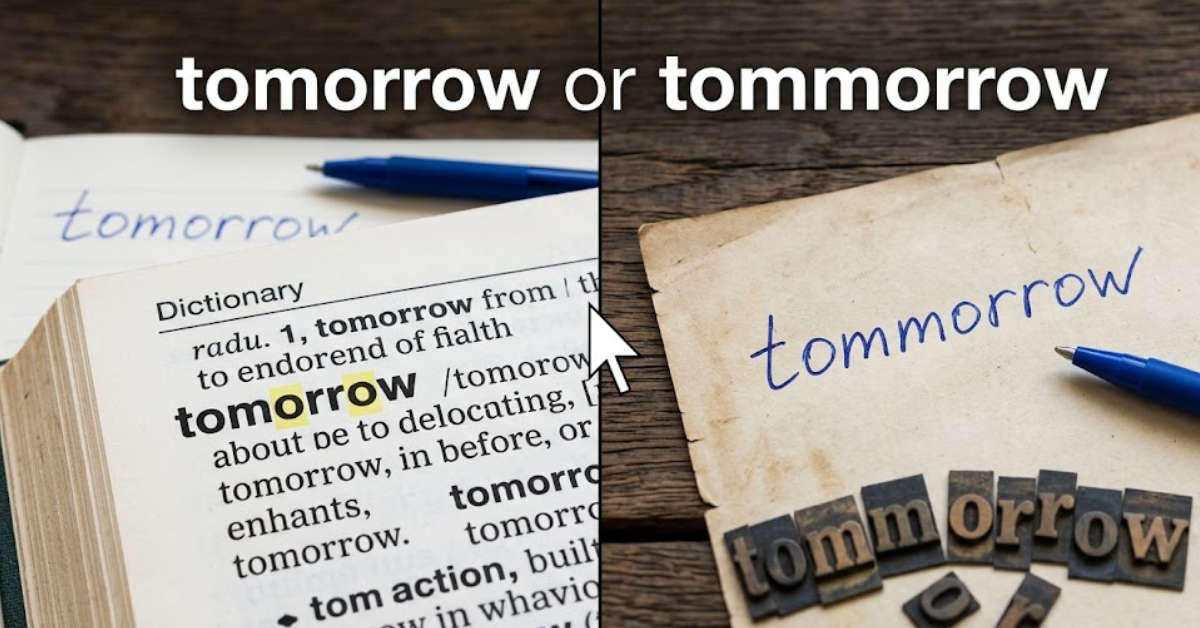
Have you ever paused while typing and wondered whether it’s tomorrow or tommorrow? You’re definitely not alone. The word tomorrow is one of the most commonly misspelled words in English, and many people accidentally write tommorrow or tommorow without realizing it.
The good news is that once you understand the correct pattern, remembering the tomorrow spelling becomes much easier. In this guide, we’ll explain the tomorrow correct spelling, why so many people get it wrong, and several simple tricks to help you spell it correctly every time.
Tomorrow or Tommorrow: Which Is Correct?
Let’s clear up the confusion right away:
Tomorrow — Correct spelling
Tommorrow — Incorrect spelling
Tommorow — Incorrect spelling
The only correct spelling is:
Tomorrow
Example Sentences
- I will finish the project tomorrow.
- The meeting has been scheduled for tomorrow morning.
- We’re leaving for vacation tomorrow.
If you’re writing tommorrow or tommorow, you’re making a spelling error.
What Is the Correct Spelling of Tomorrow?
The word is spelled:
T-O-M-O-R-R-O-W
Notice the pattern carefully:
- One “m”
- Two “r” letters
Many spelling mistakes happen because people accidentally reverse this pattern.
Correct Structure
Tomorrow
One M
Two Rs
Incorrect Structures
Tommorrow
Two Ms
Two Rs
Tommorow
Two Ms
One R
Remembering the correct letter arrangement is the key to mastering the word.
Why Is Tomorrow Often Misspelled?
The word sounds simple when spoken, but its spelling can be deceptive.
Common Reasons
1. Pronunciation Doesn’t Reveal the Spelling
When people say “tomorrow,” the distinction between one M and two Ms isn’t obvious.
2. Double-Letter Confusion
English contains many words with doubled consonants:
- Accommodation
- Embarrass
- Committee
As a result, people sometimes assume tomorrow also requires two Ms.
3. Typing Habits
Fast typing often leads to accidental spellings like:
- Tommorrow
- Tommorow
- Tomorow
These mistakes are extremely common.
Meaning of Tomorrow
Before focusing further on spelling, let’s review the meaning.
Definition
Tomorrow refers to:
- The day after today
- A future time or event
Examples
- Tomorrow is Friday.
- We’ll discuss the proposal tomorrow.
- She hopes for a better tomorrow.
The word can function as both a noun and an adverb depending on context.
Tomorrow Correct Spelling: Easy Memory Tricks
Learning a simple memory device can prevent future mistakes.
Trick #1: One M, Two Rs
Remember:
Tomorrow = One M + Two Rs
Think:
- To + morrow
- One M
- Double R
This is the easiest and most reliable spelling rule.
Trick #2: “Tomorrow Has More Rs”
The middle of the word contains:
RR
Think:
“Tomorrow has more Rs than Ms.”
Trick #3: Break the Word Into Parts
Divide the word like this:
To + morrow
This makes the spelling easier to visualize and remember.
Tommorrow vs Tomorrow
This is the most common spelling comparison.
Tomorrow
Correct
Example:
- I’ll see you tomorrow.
Tommorrow
Incorrect
Example:
- I’ll see you tommorrow.
The second sentence contains a spelling error because the word incorrectly uses two Ms.
Tommorow vs Tomorrow
Another frequent mistake is dropping one of the Rs.
Tomorrow
Correct
Tommorow
Incorrect
People often compensate for adding an extra M by removing an R, creating another incorrect spelling.
Historical Origin of Tomorrow
The word tomorrow comes from Old English expressions that meant:
- On the morrow
- The next day
Historically, “morrow” referred to the following day or the morning after.
Over time:
- To + morrow
- Became
- Tomorrow
Understanding its origin helps explain why the word contains only one M and two Rs.
Common Sentences Using Tomorrow
Here are examples demonstrating correct usage.
Everyday Conversation
- Are you available tomorrow?
- The package should arrive tomorrow.
- We’ll continue the discussion tomorrow.
Workplace Communication
- Please submit your report by tomorrow.
- The presentation is scheduled for tomorrow afternoon.
Academic Writing
- Students must complete the assignment by tomorrow.
- The exam takes place tomorrow morning.
Using the word correctly in context helps reinforce proper spelling.
Other Commonly Misspelled Time-Related Words
If you struggle with tomorrow, you may also encounter difficulties with:
| Correct Word | Common Mistake |
| Wednesday | Wensday |
| February | Febuary |
| Calendar | Calender |
| Separate | Seperate |
| Necessary | Neccessary |
| Occasion | Ocassion |
These words frequently appear on lists of commonly misspelled English words.
How to Remember Difficult Spellings
Improving spelling isn’t about memorizing endless lists.
Try these techniques:
Read More
Frequent reading reinforces correct spellings naturally.
Write the Word Repeatedly
Writing tomorrow several times can help build muscle memory.
Use Flashcards
Keep difficult words on flashcards for regular review.
Create Personal Memory Aids
For example:
Tomorrow = One M, Two Rs
Simple reminders are often the most effective.
Why Correct Spelling Matters
Correct spelling improves:
- Professional communication
- Academic performance
- Workplace credibility
- Reader confidence
A misspelled word can distract readers from an otherwise strong message.
Fortunately, tomorrow is an easy word to master once you know the correct pattern.
Frequently Asked Questions (FAQs)
Is it tomorrow or tommorrow?
Tomorrow is correct. Tommorrow is incorrect.
How do you spell tomorrow correctly?
The correct spelling is:
T-O-M-O-R-R-O-W
Is tommorow a word?
No. Tommorow is a common misspelling of tomorrow.
Why do people spell tomorrow wrong?
The word contains a combination of single and double consonants that can be difficult to remember.
How many Ms are in tomorrow?
One M.
How many Rs are in tomorrow?
Two Rs.
What is the easiest way to remember tomorrow spelling?
Remember:
One M, Two Rs
Is tomorrow a noun or an adverb?
It can function as both, depending on the sentence.
Conclusion
When it comes to tomorrow or tommorrow, the answer is simple: tomorrow is the only correct spelling. Common mistakes like tommorrow and tommorow occur because English spelling can be tricky, especially when double consonants are involved. Fortunately, remembering the rule of one M and two Rs makes the word much easier to spell correctly.
The next time you hesitate while typing, think of the pattern and write with confidence. Mastering the tomorrow correct spelling is a small but valuable step toward stronger writing, clearer communication, and greater attention to detail.