
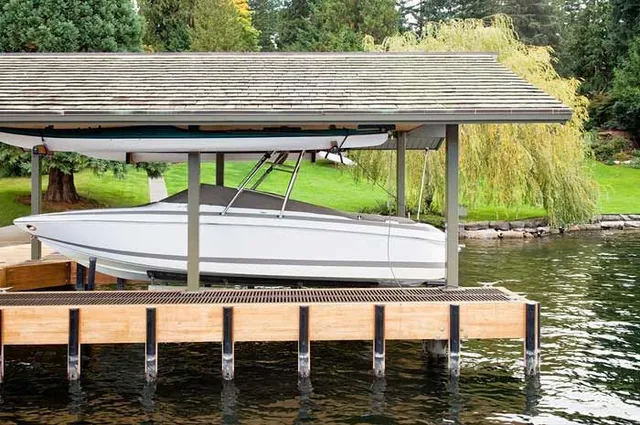
A boat lift does more than move a vessel in and out of the water. It supports the hull, protects equipment from constant immersion, and makes launching easier for homeowners, marinas, and waterfront businesses. A cargo lift can provide a similarly practical advantage by moving supplies between a dock, shore, and elevated property. In coastal South Carolina, however, regular inspection and maintenance are essential for dependable operation.
Water, salt air, storms, changing tides, electrical exposure, and heavy loads can all affect a lift over time. Property owners looking for professional support can explore Boat and Cargo Lifts Carolinas, a marine-service company serving the greater Charleston area with electrical and mechanical experience. Its services include cable work, motor replacements, inspections, controls, bunk adjustments, and cargo-lift maintenance.
Understand the main parts of a lift
A lift system contains cables, drums or spools, motors, controls, bunks, guide posts, switches, locks, and other safety devices. Each component must work correctly for the system to operate safely.
A frayed cable, worn motor, misaligned bunk, or malfunctioning limit switch can affect the entire system. Professional inspection helps identify these issues before they become an emergency.
Schedule an inspection before buying a waterfront property
A lift included with a new home or waterfront purchase should not be treated as ready to use simply because it moves during a brief demonstration. Ask for a detailed inspection of the structure, electrical components, cables, controls, bunks, guides, and safety features.
A new-home inspection can reveal deferred maintenance, incorrect setup, corrosion, worn hardware, or compatibility issues with the intended boat. It also gives the buyer a clearer idea of near-term repair and replacement costs. Keep the inspection report and service records with the property documents so future owners or contractors understand the lift’s history.
Watch cables and re-spooling carefully
Cables are exposed to moisture, movement, friction, and load stress. They can develop rust, kinks, broken wires, uneven winding, or other visible signs of deterioration. Cable damage should never be ignored or covered with a temporary solution when the cable supports a boat or cargo basket.
Re-spooling must be performed correctly so the cable winds evenly and remains aligned with the lift system. Poor winding can create uneven tension and accelerate wear. Because cable work involves heavy loads and stored energy, property owners should not attempt a repair without the appropriate training, equipment, and safety procedures.
A scheduled cable inspection is especially valuable before the busy boating season or after a severe storm.
Maintain the motor and electrical system
Motors, switches, wiring, and wireless controls need attention in a marine environment. Water intrusion, corrosion, loose connections, and repeated overloads can cause intermittent operation or complete failure. Electrical work around docks and water should be handled by qualified professionals who understand the hazards involved.
If the motor sounds different, runs slowly, overheats, trips a breaker, or struggles to raise the lift evenly, stop using it until the cause is identified. Continuing to operate a failing motor can damage other components and increase the chance of a sudden failure while the boat or cargo is suspended.
Wireless controls can make a lift more convenient, but convenience should not replace inspection. Confirm that controls, receivers, emergency stops, and automatic functions operate as intended. Keep remotes secure and make sure everyone who uses the lift understands the controls.
Check bunks and guide posts for proper support
Bunks should support the boat in the correct places rather than concentrating pressure on a vulnerable section of the hull. Changes in the boat, including a different length, width, or weight distribution, may require adjustments. Guide posts should help with positioning without rubbing against or damaging the vessel.
A lift should be evaluated again if the boat has been replaced, modified, or fitted with new equipment. Do not assume that a system sized for one vessel is automatically suitable for another. A service professional can assess the fit and recommend adjustments before regular use.
Do not overlook cargo lifts
Cargo lifts are useful for moving coolers, supplies, equipment, and other items between a dock and an elevated home or work area. They also have their own load limits, cables, motors, controls, baskets, and safety devices. Overloading a basket or using it for an unintended purpose can create serious risk.
Keep the rated capacity visible and distribute cargo evenly. Inspect the basket, attachment points, safety locks, automatic stops, and controls. Remove loose items that could fall during movement, and keep people clear of the lift path. A cargo lift should never be treated as a passenger elevator unless it has been specifically designed, approved, and operated for that purpose.
Prepare for storms and extended periods of nonuse
Before a major storm, follow the manufacturer’s guidance for securing the boat, lift, remote controls, and loose equipment. After the storm, inspect for shifted pilings, impact damage, corrosion, damaged cables, water intrusion, and changes in alignment. Do not operate a lift that appears unstable or damaged.
If the lift will remain unused for an extended period, ask about appropriate maintenance and storage steps. Regularly checking the system is usually better than allowing a small problem to remain unnoticed until the next launch day.
Use qualified marine-service support
Choose a provider that can explain the work clearly, identify safety concerns, and provide a written estimate when appropriate. Ask whether the company handles the specific lift type, component, and location involved. For larger repairs, confirm what is included, whether electrical or mechanical work requires separate coordination, and how the lift will be tested after service.
Professional maintenance is not only about convenience. It helps protect the boat, cargo, property, and people who use the dock. With regular inspections, careful operation, and timely repairs, South Carolina waterfront owners can keep their lift systems working more reliably through changing seasons.