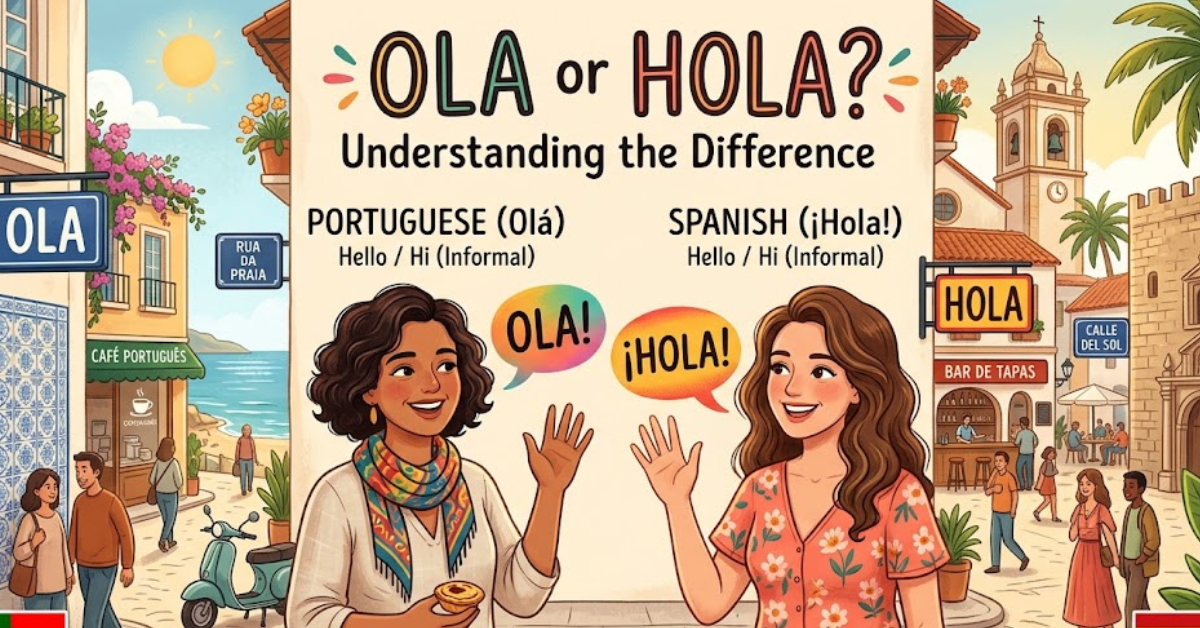
Have you ever wondered whether you should write ola or hola when greeting someone in Spanish? It’s a surprisingly common question, especially for language learners, travelers, and people who encounter Spanish words online. While the two words look similar, their meanings are completely different.
In this guide, we’ll explore hola vs ola, explain the ola meaning in Spanish, discuss pronunciation differences, and help you understand when to use hola or ola correctly. By the end, you’ll never confuse these two words again.
What Is the Difference Between Ola and Hola?
The main difference is simple:
- Hola = Hello
- Ola = Wave
Although they differ by only one letter, they have entirely different meanings in Spanish.
| Word | Meaning | Usage |
| Hola | Hello | Greeting people |
| Ola | Wave | Referring to ocean waves or figurative waves |
This distinction makes hola vs ola one of the most important spelling differences for beginner Spanish learners.
What Does Hola Mean?
Hola is the standard Spanish greeting used to say “hello.”
It is one of the first words taught in Spanish classes and is widely recognized around the world. Whether you’re greeting a friend, a colleague, or a stranger, “hola” is generally appropriate.
Examples of Hola in Sentences
- Hola, ¿cómo estás? (Hello, how are you?)
- Hola, mucho gusto. (Hello, nice to meet you.)
- Hola, amigos. (Hello, friends.)
The word is considered friendly, polite, and versatile.
When to Use Hola
Use hola when:
- Greeting someone in person
- Starting a conversation
- Answering a phone call
- Sending a casual message
In most situations, “hola” functions similarly to “hello” in English.
Ola Meaning in Spanish
The ola meaning in Spanish is “wave.”
Most commonly, it refers to a wave in the ocean, sea, lake, or another body of water.
Examples of Ola in Sentences
- La ola era enorme. (The wave was enormous.)
- Las olas del mar son hermosas. (The sea waves are beautiful.)
- Una ola golpeó el barco. (A wave hit the boat.)
The plural form is olas, meaning “waves.”
Figurative Uses of Ola
Spanish speakers may also use “ola” metaphorically.
Examples include:
- Ola de calor (heat wave)
- Ola de violencia (wave of violence)
- Ola de cambios (wave of changes)
In these contexts, “ola” describes a widespread occurrence or movement.
Hola vs Ola: Why Are They Confused?
The confusion between hola vs ola often comes from pronunciation.
In modern Spanish, the letter H is generally silent. This means:
- Hola = pronounced “OH-la”
- Ola = pronounced “OH-la”
Since both words sound nearly identical, learners frequently mix them up when writing.
The Silent H in Spanish
Spanish contains several words with a silent H, including:
- Hola (hello)
- Hombre (man)
- Hora (hour)
- Hablar (to speak)
Because the H isn’t pronounced, spelling becomes especially important.
Hola or Ola: Which One Should You Use?
A simple rule can help you remember.
Use Hola When:
- You are greeting someone.
- You mean “hello.”
- You are starting a conversation.
Examples:
- Hola, María.
- Hola, buenos días.
- Hola, ¿qué tal?
Use Ola When:
- Talking about water waves.
- Discussing heat waves or other figurative waves.
- Describing movement in water.
Examples:
- La ola es muy alta.
- Hay una ola de calor esta semana.
Remember: If you’re saying hello, always choose hola.
Origin of the Word Hola
The exact origin of “hola” remains debated among language historians.
Some linguists believe it evolved from older expressions used to attract attention or initiate communication. Over time, it became the standard greeting across Spanish-speaking countries.
Today, “hola” is among the most commonly spoken words in the Spanish language.
Origin of the Word Ola
The word “ola” comes from Latin roots associated with movement and waves. It has been used for centuries to describe the rolling motion of water.
Its meaning has expanded over time to include figurative expressions, such as:
- Wave of innovation
- Wave of immigration
- Wave of enthusiasm
These uses exist in both Spanish and many other languages.
Common Mistakes Learners Make
When learning Spanish, people often make these mistakes:
1. Writing Ola Instead of Hola
Incorrect:
- Ola, ¿cómo estás?
Correct:
- Hola, ¿cómo estás?
2. Assuming the Words Mean the Same Thing
Despite sounding alike, they are not interchangeable.
3. Ignoring Context
The context immediately tells you which word is appropriate.
Ask yourself:
- Am I greeting someone? → Hola
- Am I talking about a wave? → Ola
Easy Memory Trick
Here’s a simple way to remember:
Hola has an H because you’re saying “Hi.”
Both begin with an H sound in English, making the association easier.
Meanwhile:
Ola refers to ocean waves.
Thinking of the “O” in ocean can help reinforce the meaning.
Examples Comparing Hola and Ola
Consider these examples:
| Sentence | Meaning |
| Hola, amigo. | Hello, friend. |
| La ola es grande. | The wave is big. |
| Hola, ¿qué haces? | Hello, what are you doing? |
| Una ola golpeó la costa. | A wave hit the coast. |
These comparisons clearly show how different the words are despite their similar pronunciation.
Why Understanding Hola vs Ola Matters
Knowing the distinction helps you:
- Communicate accurately in Spanish
- Avoid embarrassing spelling mistakes
- Improve writing confidence
- Better understand Spanish texts and conversations
Even native speakers occasionally make typographical errors, but language learners benefit from mastering this difference early.
Frequently Asked Questions FAQs
Is it hola or ola for hello?
The correct word for “hello” is hola. The H is silent, but it must be included in writing.
What is the ola meaning in Spanish?
Ola means “wave,” typically referring to a water wave or a figurative wave, such as a heat wave.
Why do hola and ola sound the same?
In Spanish, the letter H is usually silent. As a result, both words are pronounced almost identically.
Can I use ola as a greeting?
No. While some beginners mistakenly write “ola” when they mean “hello,” the correct greeting is always hola.
Is hola formal or informal?
Hola is generally neutral and appropriate in both casual and many professional situations.
What does hola mean in English?
Hola translates directly to hello in English.
What is the plural of ola?
The plural form is olas, meaning “waves.”
Conclusion
Understanding ola or hola is easier once you know their meanings. Hola is the Spanish word for “hello,” while ola refers to a wave. Because the H in Spanish is silent, the two words sound alike, which often leads to confusion among learners.
Whenever you’re greeting someone, choose hola. If you’re talking about ocean waves, heat waves, or similar concepts, use ola. Mastering this simple distinction will improve your Spanish writing and help you communicate with greater confidence.
For more language-learning guides, explore related articles on Spanish vocabulary, pronunciation, and common beginner mistakes.